Monday, July 29, 2013

Dynamite: The Only Explosive You'll Love

Have you eaten Laing? Or have you tried the very exotic Chili Ice Cream? Or maybe you've been to this famous place called Bicol? 

1, 2, 3, 4


If you do, then you must have heard their traditional way of cooking meals and other cuisines specially designed to meet their high standards for 'hot' foods. By 'hot', I emphasize their use of chili peppers and similar ingredients that bring that burning sensation in the stomach. Bicolanos are called Oragons, a Bicol slang referring to somebody who is feisty, determined, principled, fighter, unafraid of consequences, and one who stands up for his principles. 1


Their patronage on serving food with enormous amount of chili peppers have made them popular in the Philippines. Students of Sensation and Perception would say that Bicolanos probably have high threshold on eating foods with lots of pepper in it. 

My family used to reside in Bicol when I was young and as we lived there, I was exposed to several foods containing great quantity of siling labuyo, siling haba and more varieties of Cayenne (Capsicum Annuum). My family has already encompassed that Bicol culture and we actually find it very enjoyable.

My Bicolana trait had made it harder for me to focus on the more important things like deadlines and meetings. I was caught up thinking of the 'hot' recipe that I had been wanting to do since last week, the dynamite recipe. Some of you might have tried eating dynamites during birthday celebrations and random drinking sessions. Maybe a few have tried eating it for just plain eating entertainment. The last I consider to be my personal reason. I am not sure if dynamites are original recipes of the Bicolanos. Oh well.

It was cold and raining outside when I decided to make dynamites. The season matched my craving for something to eat that could at least give warmth and satisfaction in my stomach. I had no actual idea on how to do it but I just made it like lumpia but instead of using the usual wrapper, I used siling haba or Capsisum annuum var. longum.
Capsisum annuum var. longum

I never really had a hard time looking for this specific specie because they were always available in the market. When all ingredients were ready, I proceed to the actual process of making dynamites. I enjoyed and kind of missed the feeling of being busy with ingredients that would give me a delightful reward after. 
Ingredients: Capsicum Annuum var Longum, eggs, ground pork, banana, carrots, potatoes, ground pepper, salt, breading, bread crumbs.
When I finished preparing for dynamites, I fried them for 2-3 minutes and tada!
DYNAMITES!

It may not look that delicious but it tasted good at least for those who ate it for free. I was just kidding. It actually made me feel better knowing I was able to cook again AS IF I was so good at it.

Anyway, I would like to share the reactions of the people who ate my dynamites and see whether I could apply some of the things I learned about sensation and perception. I have mentioned awhile ago that our family was used to eating foods containing chili and the like. However, for those who were not accustomed to the same culture that we were used to, like my cousins from other provinces, the taste of dynamite was, at first, disturbing for them. They expected dynamite to be really hot for it was made of green finger peppers. From that point, I recognized that when I let them eat dynamites, it was like I was conducting an informal experiment on them.

I found out that they may be utilizing their previous knowledge about peppers and expected the same taste of it in whatever contexts. This is a manifestation of constructivist theory of perception. However, after tasting dynamites, they changed their opinion saying that dynamites did not really taste that hot. It was more bearable than they anticipated it to be and they continued to eat and eat until all the dynamites were consumed. From that point, one would say they employed the check-recheck mechanism of Analysis-by-Synthesis Theory of perception. In the end, they found dynamites to be really good.

I also thought that absolute thresholds could be playing a trick on this. According to Goldstein (2010), the absolute threshold is the smallest amount of stimulus energy necessary to detect a stimulus. In a study conducted by Orellana-Escobedo et. al (2011), they determined the absolute threshold and just noticeable difference of their participants as determinants of pungency. A better understanding of the process involved in the sensory perception of pungency is currently required because "hot" foods are becoming more popular in western cuisine. Given this association of economic agenda and formulation and development of new product, determining the absolute thresholds on pungency of people would indeed be necessary to encapsulate a more general value that would be suitable for the mass market. 

Some reasons why 'hot' foods are getting more popular are its ability to increase metabolism and that these are excellent for the weight conscious. 2 Chiles are cholesterol-free, saturated fat-free, low calorie and high in fiber. Capsicums contain more vitamin A than any other food plant. Chiles provide an excellent source of vitamin C and the B vitamins, plus significant amounts of iron, thiamine, niacin, magnesium and riboflavin. The thermic effect of chiles requires six grams of chiles to burn off an average of 45 calories in three hours, the reason behind the sweating of people who are eating 'hot' foods.

There are other several benefits that one could get from eating foods with chili. There are cosmetic products that contain Capsaicin, the "hot" ingredient of chili.

In a recent study, researchers found that red chili pepper appear to be effective inhibitors of the cancer process. They looked at the chemotherapeutic potential of capsaicin, the "hot" ingredient in red chili pepper that is often associated with antioxidative and anti-inflammatory activities. In the study, it exhibited anticancer activity against pancreatic cancer cells. It disrupted the mitochondrial function resulting in the release of cytochrome c, which induced apoptosis, or programmed cell death, in the cancerous cells without affecting normal pancreatic cells.3 In the extension of the study, they found out that high consumption of food containing Capsaicin was conducive to heighten risks of gastric cancer. The results were still on investigation but they already considered too much consumption of Capsaicin as an indicator of stomach cancers.

Having all these information, it would be noteworthy to consider the amount of chili peppers to be used in our food. I think these researches would be helpful especially to people who are really fond of 'hot' foods like the Bicolanos. The value of their absolute thresholds on pungency could be really helpful to see whether Capsaicin consumption is related to heightened risks of gastric cancer. One research could be conducted to investigate this relationship in the context of the Bicolanos in the Philippines.
----

References:

Capsaicin and red chili pepper-benefits or side effects. Retrieved from http://www.zhion.com/herb/Pepper.html


Goldstein, E.B. (2010). Sensation and perception (8th ed). Belmont, CA: Cengage Learning.
Green Finger Hot Chile Pepper. Retrieved from http://www.specialtyproduce.com/index.php?item=3013. 

Oragon definition. Retrieved from http://www.urbandictionary.com/define.php?term=oragon.
Orellana-Escobedo, L., Ornelas-Paz, J.J., Olivas, G.I., GUerrero-Beltran, J.A., Jimenez, Castro, J. & Sepulveda, D.R. (2012). Determination of absolute threshold and just noticeable difference in the sensory perception of pungency. Journal of Food Science. Retrieved from http://lib.bioinfo.pl/paper:22384966.


Water please, cold with no ice.


Mmm... doesn’t that look good? A lot of people will probably really enjoy that cake, but at the same time, many won’t. It might be because they’re allergic to chocolate, or because they don’t like cakes, or simply because they don’t have a sweet tooth.

A 2013 study called "Temperature of served water can modulate sensory perception and acceptance of food" published in the University of Arkansas, however, suggests that the sweetness of chocolate – or rather, your perception of the sweetness can be affected by something unexpected: the temperature of the water you drink!
Source [x]


In this psychological study, researchers Mony, Tokar, Pang, Fiegel, Meullenet, and Seo have found that after drinking cold (4 degrees Celsius) water, people were less likely to enjoy their chocolate: they found it less sweet, less chocolatey, and less creamy than when they drank room temperature (20 degrees Celsius) or hot water (40 degrees Celsius). Mony and her companions believe that this is due to TRPM5, a taste-receptor present in our tongues. TRPM5 is activated by a certain level of heat, and if it's not activated – such as when we drink cold water before a meal – we're less sensitive to sweets! 

So what does this mean? Well, have you ever been to China? If you have, you might've noticed that when you ask the waiters for water, they give you room temperature water. If you want to have cold water, you have to specify - "water with ice"! If you haven't, just think back to the last time you ate at a Japanese or Chinese restaurant -- what did they serve you? They probably gave you some hot tea to start off your meal. In Asia, meals are usually taken with hot tea or soup, and warm water, so the flavors are so much richer. But in North America, what do you always get when you order a sugar-filled burger from McDonald's? A cold glass of coke, that's what.

If you always drink cold water before you eat, then you probably don't think your food is sweet enough. If you don't think your food is sweet enough, then you'll add more sugar -- once or twice might not seem like a lot, but what if you did this every time you ate? What if your whole family, your whole city, your whole nation did this for every meal?

Now, this is only one study, and one study won't change the world. This doesn't mean that every weight-loss program and calorie-counter should start drinking warm water -- every study has its drawback. This one was conducted purely on North Americans, for example, so you don't have a worldwide pool of samples. They also found that the water temperature had absolutely no effect when they tested it with cheese, or salts in general. Still, the study has been done and confirmed by other scientists. If nothing else, the next time you try out a new brand of chocolate, think to yourself -- what did I just drink?

References

Mony, P., Tokar, T., Pang, P., Fiegel, A., Meullenet, J. & Seo, H. (2013). Temperature of served water can modulate sensory perception and acceptance of food. Food Quality and Preference. 28(2), 449-445. Arkansas, USA.

Talavera, K., Yasumatsu, K., Voets, T., Droogmans, G., Shigemura, N., Ninomiya, Y., Margolskee, R.F., & Nillius, B. (2005). Heat activation of TRPM5 underlies thermal sensitivity of sweet taste. Nature, 438(7070), pp. 1022-1025.


Wel

Stressed with a sweet tooth?

Photo Source [x]

Recently I've been so stressed with school and other personal matters. My neuroticism scores in personality tests are actually quite high. I am prone to feeling stressed and I can't help but eat and eat when I feel stressed. I try to study but I end up taking a trip to the fridge to make myself a sandwich or get basically anything that I can eat.

I bet this has also happened to you. I mean, in a fast-paced world like ours, how can you not experience stress? Some of us go to school and get stressed over the academic workload. Some of us go to work and experience stress because of our bosses and work demands. Some even experience stress at home - with family, financial, relationship matters. 

And of course there are many different ways of relieving stress. Different stress management activities are available. These would include yoga, playing games, and shopping. Many, like me, resort to the easiest thing to do, which is to stress eat. Food is everywhere. People have a tendency to just eat "comfort foods" when they are stressed. Many comfort foods would include fatty foods such as french fries. Research suggests that a hormone called ghrelin is responsible for this behavior (Chuang et al., 2011). Ghrelin, or the so-called "hunger hormone", is released from the gastrointestinal tract and it sends hunger signals to the brain.

Photo Source [x]

So, while we eat a lot of food when we're stressed, does stress have an effect on our perception of taste? Research suggests that stress does have an effect on taste perception. The group of Al'absi, Nakajima, Hoooker, Wittmers, and Cragin (2012) studied the effects of stress using the principles of magnitude estimation. Magnitude estimation is a method in psychophysics where the participant assigns a number to a stimulus that is proportional to their perceived intensity of the stimulus (Goldstein, 2010). Basically, the participant estimates the magnitude of a given stimulus.

In the study of Al'absi, Nakajima, Hoooker, Wittmers, and Cragin (2012), they first asked some participants to participate in different stress-inducing activities such as public speaking (preparation and delivery), mental arithmetic task, and a cold pressor test. Other participants were asked to rest for 30 minutes. Then, the taste test was administered. Five solutions were presented (water, sweet, salty, sour, and savory). After administration, the participants were asked to rate verbally the intensity of the solutions. The participants saliva were also taken as samples during their recovery from the stressful events.

Results of the research show that stress was associated with reduced sweet taste perception. It was also shown that poststress cortisol levels reduced intensity of salt and sour.

So, sorry to all those with a sweet tooth. When you're stressed and you want to stress eat, lay off your favorite cakes and chocolates first. You might not be able to appreciate the taste as much as when you're not stressed. Maybe you can munch on a few fries or other healthier salty foods first, then when you're no longer feeling stressed, indulge in all the sweets you want. 

-Samantha Rae M. Sanchez


References: 
Al'Absi, M., Nakajima, M., Hooker, S., Wittmers, L., & Cragin, T. (2012). Exposure to acute stress is associated with attenuated sweet taste. Psychophysiology, 49, pp.96-103. 

Chuang, J. C., Perello, M., Sakata, I., Lawrence, S. O., Savitt, J. M., Lutter, M., & Zigman, J. M. (2011). Ghrelin mediates stress-induced food-reward behavior in mice. J Clin Invest, 121(7), pp. 2684-2692.

Goldstein, E. B. (2010). Sensation and perception (8th ed). Belmont, CA: Cengage Learning.


Fats are everywhere!

Fats make everything delicious.

Oh yeah they do. Check this cripsy liempo freshly taken out of a hot pan.

Oh but how about this double-layered burger filled with easy-melt cheese plus an incredibly triple-layered tender meat roasted to its perfect redness?
Or imagine munching on one of these?

Fats make this oh-so-bitter-full-of-misery-world up side down, as if one munch lets you forget about all the other saddening flavors of the world. I'm not personally a fan of fatty foods such as these but whenever I'm stressed out or pretty much want to get out of this world to the extreme level, which rarely happen (usually every three months or so), I do Hashbrown burger of Jollibee (ooh tween-tums!).
And what do you know? It's in fact actually true! MRI scans showed that eating food containing fats reduce activity in some brain areas that are responsible for detection of flavors. It makes you forget about other stuffs (Rayner-Nottingham, 2012).

The MRI scans done above was a three-year study done by the University of Nottingham and Unilever, a multinational food company. A group of participants in their 20s were made to consume four kinds of samples, all having the same level of thickness and sweetness but one contained no fat and the other three had fatty emulsions also with different flavor release properties (this was added probably so that they could assess whether the participants actually detected the right kind of flavor given that the food sample had a food emulsion in it).

According to the study, the somatosensory cortices and the anterior, mid, and posterior insula were significantly more activated during the consumption of the non-fatty food sample. These brain areas are responsible for flavor perception. This suggests that there is less detection of flavor whenever there is fat in the food. So what makes us addicted to fatty foods when in fact our flavor goes undermined? Perhaps it's because of the texture, of the chewiness, of the greasiness, of the smoothness of it in our mouth! Okay, I'm gonna stop.

In relation to the course, I think such a study can also be done without the use of MRI machines, which the department doesn't have so it's really impossible to do so with it! Absolute threshold is a technique that "measures the smallest amount of stimulus energy necessary to detect a stimulus" (Goldstein, 2010). Here the flavor will be constant (whichever flavor that goes well with fat or at least socially acceptable combination of a certain flavor with fat!) but then the percentage of fat in the food samples will be differentiated, hence the varying intensities. The combination should be done in an effort to not make the flavor too distinguished or too undermined so a pretest is necessary for the ideal combination to be possible and realistic. The participant will then be presented with different intensities of fatty emulsion and they will detect whether they have tasted the flavor. According the study discussed above, higher percentage of fatty emulsions should result in more difficulty in detecting the flavor. Doing this so will enable us to determine the amount of fatty substance in the food that still enable us to detect vividly the flavors. It can also be the other way around. Doing this so will enable us to determine the amount of fatty substance in the food that reduces our ability to detect food flavors. This can provide valuable information to food industry and to how they will create products that will provide the maximum benefit for the consumers and also for them.

Other points to be made in such a proposed research would be that the amount of fatty substance in the food samples should be just enough and not too much to the point that it will be harmful to the participant. There should also be caution in terms of the participant's health conditions (i.e. participants who are at risk of high blood or the like should rather not join the experiment).

Posted by: Kate Ilene Ang

References:
Goldstein, E. B. (2010). Sensation and perception (8th ed). Belmont, CA: Cengage Learning.
Rayner-Nottingham, E. (2012). How the brain reacts to the taste of fat. Futurity.org. Retrieved from http://www.futurity.org/science-technology/how-the-brain-reacts-to-the-taste-of-fat/

Images:
https://blogger.googleusercontent.com/img/b/R29vZ2xl/AVvXsEj-3qqa62ki_JwmmenxTO5PbPIIVEkPRlDbe2qKztCtwwnN_4BZG9Ez6dB-kzvTjj8Aofdhd7fDu5-L7RbU9NBD71B-8SShDrRVa_sdD3QaWKeD0Ja7DgT1R6CPSdMw24XlQOP9eNeKgGU/s640/maxresdefault.jpg
https://blogger.googleusercontent.com/img/b/R29vZ2xl/AVvXsEjScVl3rG3gIfQeqLajitzjil7kqHhJ8y2koRT54fnrtRvByr1mAKDysMeZ4xQI1VXEca-VReG47B36k1rA73LsIQFFfHvMBiu9WT6pPRoY7dhfGk_tipOq68RLiwt1rF9tgEy8PRiYiM0/s640/21475_130626774624659.jpg
https://blogger.googleusercontent.com/img/b/R29vZ2xl/AVvXsEhSU-Od3X5q0dGo7KoRkEzTZ8eKSAuOku-xZ6tNeCBVhLYNeXe4dPTIBjuKVbYkwhqyZ-0XqqUYMSrQYAYLKF6RYabjxEEN_tqeXoi6-oxoyAlnn_0GvXm6DCtEMy6KIBoIYpFfHnHoi34/s400/jollibee-hash-brown-burger_Yedylicious_b.jpg
https://blogger.googleusercontent.com/img/b/R29vZ2xl/AVvXsEhtIUU89NYPRYnGQs7vEqVAG-lW5fODsf413x2CyilMQmVYzmj-Uj6PaajT-j4bz8C5cCQUwto7Tr-E9U-eoP719EvatUiE9eCsQLXgr7a7crYsbnsbXY1TPZu22KVDidKYV3ZZgZM1ZYs/s400/images.jpg

Going Dark or White?


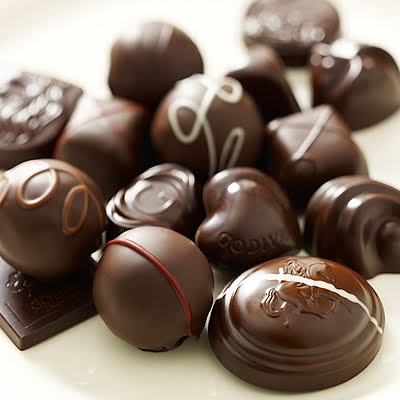
Who doesn't love chocolates? I know I do. There are lots of types and forms of chocolates out there and we all have our preference. For now, let's talk about going dark or milky. Preference as it seems is affected by region. Based on their sales, General Manager of Mrs. Cavanaugh's, Paul Jensen said that Easterners prefer dark ones while Westerners go for milky ones. However, naturally, chocolate is bitter. Cacao has polyphenols and these polyphonic compounds produce the bitter taste in unprocessed Cacaos. So the cacao pods go through process such as fertilization to reduce the bitter taste for customer acceptance. Technicalities aside, have you ever wonder what would be the response of dark chocolate lovers and milky chocolate fans if they were presented with chocolate pieces with varying amounts of less processed cacao. Will the milky lovers be more sensitive to the presence of cacao powder? What do you think?

The answer can be found in the study made by Harwood. M and colleagues on tolerance for “bitter” tasting chocolates. The study made use of rejection threshold which is the value below which a stimulus is rejected by an individual. (Glossary Speech Server, 2007). Rejection threshold stimulus allows researchers to determine the amount needed to cause a rejection response in a certain stimuli. (Harwood, Ziegler, Hayes, 2013)

Put simply, the study explored at what level would Team dark chocolate and Team white chocolate would say “it’s too bitter!” which would mean they rejected the chocolate. Since Team Dark loves and probably is accustomed to the bitter taste, it would take more bitter powder (under-fertilized cocoa powder) for them to say it is too much. Meanwhile, Team White loves sweet and would therefore be more sensitive to the bitter taste. Do you agree with this hypothesis? Well, let’s see what happens.

Harwood and colleagues asked 99 individuals, 53 preferring milk chocolate and the remaining dark chocolate, to participate in this study. Surprisingly, the study showed that there was no difference between the two groups. Basically, both groups, whether they are Team Dark or Team White, have the same reaction to an increase in the under-fertilized cocoa powder in a chocolate sample.

What is interesting in this study that even though people have their own preference in chocolates, they rejected the bitter tasting samples. Both groups showed the same threshold for bitter chocolates which is 80.7%!


In the end, bitter chocolate is still bitter no matter which team you are on. Personally, I love dark chocolate. How about you, which team are you on? 


References: 

Glossary Speech Server. (2007). Retrieved July 29, 2013, from msdn: http://msdn.microsoft.com/en-us/library/bb857298(v=office.12).aspx

Harwood, M., Ziegler, G., & Hayes, J. (2013). Tolerance for High Flavanol Cocoa Powdet in Semisweet Chocolate. Nutrients, 2258-2267.

Photo one taken from: http://images4.fanpop.com/image/photos/24000000/Yummy-c-D0-BD-CF-83-C2-A2-CF-83-E2-84-93-CE-B1-D1-82-D1-94-D1-95-24009285-400-400.jpg

Photo two taken from: http://l.yimg.com/ea/img/-/130227/640px_chocolate_en_rama_18iqhoa-18iqhop.jpg?x=400&sig=Bq2Tj9edck33pZAEWM.rCg--


There’s always room for dessert.

That’s my motto. And there’s no better dessert than a couple of pieces of cookies. I love cookies because they’re not as heavy as cakes or pies, and it’s easier to bake than any other dessert I know (who doesn’t love freshly baked desserts?).

For a few days now, I’ve been itching to try out this recipe I found in Sweet Tooth. It’s a recipe for S’Mores Cookies, and they just look so good and so inviting and really, really delicious.

 Photo Credit: [1]

S’mores Cookies


1-3/4 cups all purpose flour
1 cup graham cracker crumbs
1 tsp baking soda
1 tsp salt
1 cup (2 sticks) butter, softened
3/4 cup sugar
3/4 cup brown sugar
2 tsp vanilla extract
2 eggs
2 cups mini chocolate chips
1-1/2 cups mini marshmallows, or large ones cut up
2 Hershey bars, chopped


Procedure:

1.       Preheat oven to 375 degrees
2.       With an electric mixer, beat together the butter and sugars until light and fluffy
3.       Mix in eggs and vanilla to butter mixture until combined
4.       In a large bowl, whisk together flour, graham crackers, salt, and baking soda
5.       Add the flour mixture to the butter mixture and mix well
6.       Stir in the chocolate chips
7.       Use 2 tablespoons or a medium-sized ice cream scoop to drop rounded tablespoons of dough onto cookie sheets
8.       Bake for 8 minutes and remove from oven. Push a few marshmallows and pieces of chocolate into each cookie and return to the oven to bake an additional 3-4 minutes.
9.       Cool cookies on a wire rack (or just hand them over steaming hot to your hungry friends)

Recipe yields about 3 dozen cookies

Photo Credit: [2]

Even though I know this recipe will be a hit with everyone, some will resist trying out these cookies. People now are more conscious of their health and weight and are more resistant to the temptation of cookies (and desserts) than ever before.

In an effort to maintain, gain, or reduce weight, people are coming up with different and creative ways to do so. Some people try different types of diets, some resort to extensive exercise programs, while others choose to buy new cutlery in order to trick their brain (and themselves)into thinking that they’re eating less/more. 

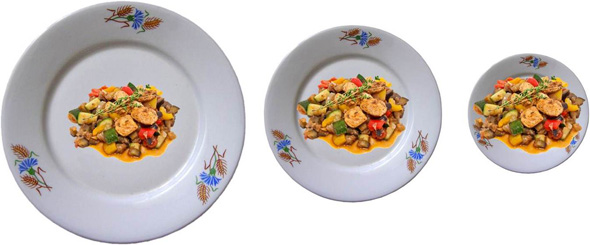
I watched a documentary a few years back about a woman who was trying to lose weight. She said that using smaller plates instead of the standard sized ones (9"-10") helped reduce the amount of food she served herself and the amount of food she ate. This could have something to do with her perception of how much she was putting on her plate. Given a particular amount of food, this may look smaller on a big plate (where it occupies say, only half of the plate) or larger on a small plate (where it could fill up the whole plate). 


Photo Credit: [3]

A study done by Wansink, van Ittersum, and Painter (2006)found that the size of the container does indeed affect the amount of food you put in it. Another study done by Penaforte et al. (2013) shows that, on the contrary, plate size does not affect a person’s perception of food portion size. One way to see whether or not plate size affects perception of amount of food is to use the method of Magnitude Estimation.

Magnitude Estimation is a technique developed in 1958 by S.S. Stevens that accurately measured the relationship between perceived magnitude intensity and stimulus intensity (Goldstein, 2010). In other words, it tells us how accurate or inaccurate people are at estimating the true intensity of a given stimulus.

In a magnitude estimation experiment, the experimenter will present the participants with a standard stimulus and its exact intensity. After which the experimenter will present several other stimuli whose intensities the participants must now guess. In the case of ‘plate size’ we can have two conditions: one where the food is placed on a big plate and another where the same amount of food is placed on a small plate. By doing this we can see if participants really see food placed on a smaller plate as more than when the same amount of food is placed on a larger plate.

There are other researches that tackle the non-edible factors that affect the amount of food people consume like plate color, table cloth color, cutlery size and color-- but we'll leave that for another time.

References:

Goldstein, E.B. (2010). Sensation and perception (8th ed). Belmont, CA: Cengage Learning.


Sunday, July 28, 2013

Ang Gusto Ko Lang Naman Ay McDo Fries! Or is it Jollibee Fries?


 Did you ever have a debate about which fast food chain is better? Or, did you ever experience a dilemma on where to eat?


Well, these debates and dilemmas are possible because of our different abilities to differentiate the tastes of food. Some people may not be able distinguish which batch of fries is from McDo and which one is from Jollibee. Then, some can!  But what is the explanation for this?


This is because of people’s dissimilar levels of sensitivity towards the various details of food. In a more scientific sense, we can say that people have different levels of difference threshold. The difference threshold (Differenze Limen) is the smallest difference between two stimuli that a person can detect (Goldstein, 2010). To apply this to our McDo-Jollibee dilemma, let us have two fast food lovers, Sab and Belle.
Sab is a very observant girl, she notices the smallest things. In fact, she is able to tell which fries are from which fast food based on the oil content or the width of the slices of the potatoes. On the other hand, Belle is less of an observer. She just loves eating fries, and doesn’t care where it is bought. Actually, she can’t detect which fast-food chain serves crispier and longer fries. With these cases, we can say that Sab needs a smaller difference between two batches of fries in order to detect where it was from than Belle needs.


Aside from the differential threshold, they are more elements why people experience dilemmas on choosing where to eat. Some people focus more on the ambience of the place. As in, people go to that place because of the aroma of the food and drinks are simply irresistible  Then, there are some who value the friendliness of the crew. Of course, there are some who are picks the place because of the price range. Lastly, some focuses on the taste of the food. Some even dwell into the detail, like the combination of textures. Can you now imagine the crispy outside but the soft chewy inside type of food? Well, this is not just common sense. In fact, there is a study which argues that when we eat, multiple senses, taste, smell and touch, combine to form flavour (Stevenson, 2013). But, there is another sensory modality which wants to be included, vision.

Have you ever seen posts on those scrumptious and mouth-watering photos of various kinds of food? These pictures may serve as evidence that in food, for some people, LOOKS DO MATTER. In humans, detecting, identifying and selecting food principally involve the visual system. Moreover, Spence & Piqueras-Fiszman (2012, as cited in Stevenson, 2013) explains that foods are almost always visually identified before being place into our mouths. In vision, this includes the color influences on perceived flavor. However, there are also some researchers who disagree in the inclusion of vision as a part of the flavour percept. For example, Stevenson and Oaten (2008, as cited in Stevenson, 2013), argues that there is uncertainty over what these visual influences represent, namely, demand versus top-down alterations in flavor perception.

So, after reading this post, I have some questions for you! Feel free to answer them in the comment box!

1.      Do you believe vision has to be taken as a part of the flavor percept?
2.     What do you value most in picking the place where you want to eat?
3.     Are you more of a “Sab” or a “Belle” in terms of the difference threshold?
4.     Lastly, simply pick: McDo fries or Jollibee fries?


===Trazo, Gaea Isabel D.===


References:
Stevenson, R. J. (2013). Flavor Binding: Its Nature and Cause. Psychological Bulletin, doi:10.1037/a003347

Goldstein, E. B. (2010). Sensation and peception. (8th ed.). Belmont, California: Wadsworth, CENGAGE Learning

Images: 
http://ts1.mm.bing.net/th?id=H.4945703138493544&pid=15.1
http://ts2.mm.bing.net/th?id=H.4842284692211761&pid=15.1
http://ts4.mm.bing.net/th?id=H.4754860619074115&pid=15.1


Saturday, July 27, 2013

The Three Theories You Should Know About

Constructivist Theory
Constructivist theories focus on the ways people create meaningful understandings of the world (Raskin, & Bridges, 2002) and not just the direct registration of physical energy into our senses. It is a top-down process, which means that previously acquired knowledge, beliefs and expectations influence the way you perceive things. According to Eysenck and Keane (1995), because perception is influenced by individual factors, errors are made which may lead to inaccurate perceptions.

As an example, take a look at this photo: 


Photo Source: [x]

It’s brown, creamy, and it’s spread on bread. What do you think it is? 
If you guessed Nutella, Crumpy, or even Coconut Jam -- well, you’re absolutely... wrong. That right there is vegemite. 


Photo Source: [x]


Vegemite is an Australian-spread made of brewers’ yeast extract (by-product of beer production), wheat, vegetables, and spices. It tastes incredibly salty, and vaguely like beef. 

Here in the Philippines, and Asia in general, Vegemite isn’t very popular -- when we see brown creamy palaman on toast, we think of sweet pastes like Nutella, Crumpy, and Coconut Jam, because that’s what our experience tells us. Top-down processing and the constructivist theory work in the same way: if you see something unfamiliar, your mind builds a taste, a picture, a scent -- from what is familiar, and assumes it even before you experience the sensation. 

Ecological Theory
The Ecological Theory of Perception was proposed by a psychologist named James Gibson. It is based on four basic principles. The first one states that stimulus can be properly described in terms of the optic array. The second states that movement of observer creates the important information for perception. The other two principles are invariant information is the key element of the optic array and invariant information leads to direct perception of the stimulus, together with its meaning.

So what does this all mean? Gibson's theory or approach to perception states that light enters the visual system as an optic array that is rich in highly complex information (Hermes, n.d.). For example, you walk into a kitchen. By moving around the kitchen (the environment) the flow of information over the senses - the sight of apples in the pantry, the smell of cinnamon, etc - is the essential source of information. When you walk in the kitchen, you scan the environment in the course of perceiving. Gibson's Ecological Approach simply states that the observer (you) and the environment (the kitchen) are inseparable. 
Photo Source: [x]


Information Processing Theory
The Information Processing Theory is used to explain and describe mental processes, likening the brain to a computer. 


Photo Source: [x]

Like the computer receiving information from the keyboard, the brain receives information from the sensory register which is composed of the different sensory organs (i.e. eyes, nose, etc.). This information is then processed by the working memory a.k.a. short term memory where it could be used, discarded (or forgotten) or transferred to the long term memory where all the information not being used at the moment is held (which is the computer hard drive).


Photo Source: [x]

Let’s say you’re craving cookies, and you’re too lazy to go out and buy. So you decide to bake a batch instead. You go through hundreds of recipes and have to decide on one. Your brain receives information from your eyes and your short term memory processes what you see so you can understand what you’re reading and help you choose which recipe you’re going to use. Once you’ve found it, you write it down, and through rehearsal (repeating the recipe in your head over and over again), this information will be transferred to your long term memory. Because this information is stored in your long term memory, this recipe will be available for retrieval even after days (or months) have passed since you last accessed it.

References:
Goldstein, E. B. (2010). Sensation and perception (8th ed). Belmont, CA: Cengage Learning.

Hermes, D.J. (n.d.). Ecological psychology: General. Retrieved from http://home.tm.tue.nl/dhermes/lectures/SoundPerception/09EcologicalPsychology1.html

Raskin, J. D., & Bridges, S. K. (2002). Studies in meaning: Exploring constructivist psychology. Retrieved from http://www.constructivistpsych.org/sim1

The Perceptual Process

The first thing we have to tackle when dealing with perception is the perceptual process. Simply put, the perceptual process is a sequence of processes that help us understand and decipher the world we live in. The perception process has 4 parts - stimulus, electricity, experience and action, and knowledge (Goldstein, 2010). 

So how does this process work? Let’s start with the stimulus. Pretend you’re in the market. It’s seven in the morning, and you can feel the sun bearing down on your neck. The air is hot and sticky on your skin. It’s crowded and noisy, and all around you people are haggling over fruits and vegetables, while over everything hangs the distinct smell of a fisherman’s freshly-caught haul...

All of the sensations bombarding you – the hypothetical you in the marketplace – is considered a stimulus. Specifically, these are called environmental stimuli. Environmental stimuli surround us every day, but we don’t often notice them until they become attended stimuli. A stimulus becomes attended when you focus your attention on it – for example, can you find the pear in this picture?


Photo Source: [x]

Eventually your attention will wander elsewhere, and the attended stimulus will change, but until then, your brain will be busy creating an image or representation of the pear in your eyes – this is called the stimulus on the receptors. 

As your receptors receive energy from the environment, it undergoes a process called transduction in the nervous system, which transforms the energy from the environment to electrical energy. The pattern of light created in your retina when you saw the pear will be transformed into electrical signals which will activate neurons which in turn will activate MORE neurons. Eventually, these signals will reach the brain where it will be processed. One thing we must always remember is that although the signal that reaches the brain is a representation of the original stimulus, it is different from the original signal.

All of these will then transform into something we are aware of-- perception. Perception is a conscious sensory experience which results in recognition and action-- two important outcomes of the perceptual process. Recognition is our ability to place an object in a category that gives it meaning while action involves motor activities and moving through the environment (which would translate to our behavior in response to our perception of the stimulus).

Let’s go back to the market. Assume that you did see the pear. Once your brain receives the signal from the receptors in your eyes, you will be aware that what you’re seeing is a lone pear in a basket full of apples. Not only did you categorize the pear as being a pear, you also categorized it as not being an apple. Seeing as the pear does not belong in that basket, you pick it up, and you place it in its rightful place-- the basket with all the other pears. That is your action.

Your knowledge, whether learned years ago or recently obtained affects perception as well. The fact that you know what a pear is and how it looks like is an example of how knowledge learned years ago affects perception. There are 2 different ways of processing information and these are bottom-up processing and top-down processing. In bottom-down processing, processing is based on incoming data. For example, the incoming data would be the light on your retina coming from the pear and the apple. Then, that is when you perceive it to be an apple or a pear. Top-down processing, on the other hand, is processing based on knowledge. Since you have previous knowledge that apples are green and round, you perceive the things you see as apples.

As we’ve seen, the perceptual process is complicated and it happens faster than a blink of an eye. As you’re reading this, the perceptual process has probably gone through the motions a hundred times already. There are a lot more things to learn about perception and what we’ve discussed above is just the tip of the iceberg-- an overview of something bigger.


References:

Goldstein, E. B. (2010). Sensation and perception (8th ed). Belmont, CA: Cengage Learning.

Welcome

Hello and welcome to Jane’s Kitchenette! Here at Jane’s, we like to talk about two of our greatest passions: food, and perception. Why the strange combination? Well, before we can answer that, first we have to explain what perception is.

WHAT IS PERCEPTION?
Perception is a conscious sensory experience (Goldstein, 2010). It is the process of  comprehending and interpreting by means of cognition and our different senses. For example, you walk into the kitchen and you spot a slice of cheesy pizza on the counter. Perception happens when the electric signals that represent the slice of pizza are transformed into your experience of seeing and smelling the pizza - simple as that!
Photo Source [x]


WHY FOOD?

Photo Source: [x]


In cooking, eating, and even shopping for food, humans are able to experience(better word?) the five traditional senses: sight (visual), hearing (auditory), taste (gustatory), smell (olfactory), and touch (tactile), and even some of the less-known senses like thermoception and nociception! Although food and perception may seem like they’re worlds apart, if you follow this blog you’ll soon realize that they’re two peas in a pod!

References:

Goldstein, E. B. (2010). Sensation and perception (8th ed). Belmont, CA: Cengage Learning.
 

Blog Template by BloggerCandy.com; Edited by SamS