Monday, August 12, 2013

Strawberry?


Have you ever noticed how a brand’s logo often says something about the product? The badly-pixellated Royal Tru-Orange logo up there is, surprisingly, mostly orange. It even has a little orange slice up on top. Even if you’ve never seen, heard, or tasted Royal, you can probably guess that it’s some sort of orange-y drink.

The Sprite logo is a bit more of a stretch. It’s green, and so are limes, and that’s definitely a fruit from the lemon family above the “i”. It’s also supposed to look like the sun and sea, so you’ve got that refreshing vibe. If you know anything about how soft drinks work, you’ll easily figure out that Sprite is a lime-based drink.

Then there’s the Coca-Cola logo. It’s... well. It’s pretty red. And there are some white stripes here and there. And a little more red. So that means it’s... strawberry flavoured?

It might make sense to a lot of people that a product’s colour and packaging influence the way consumers think about it. In fact, a 1995 study by researchers Smets and Overbeeke showed that orange packaging led people to believe that the product would be sweeter than did white packaging. (Smets, 1995) The more recent 2011 study “Tough package, strong taste: The influence of packaging design on taste impressions and product evaluations” has shown that this isn’t always the case. (Becker, 2011)

In that experiment, the colour of the packaging did nothing for the tester’s impression of the product at all. What they did find, however, was that the shape of the product can affect the attitude of the consumer to the product, and how expensive they think it is.
So what does this mean? Should all product packaging henceforth be pointy and white? Do we do away with rounded bottles and cases in favour of its angular siblings? As always, a conclusion can’t be made based on only one article. If the idea of colour influencing the customer’s view of a product can be contested almost twenty years after an experiment was performed, then it’s pretty clear that there hasn’t been enough research, both theoretical and practical, to really say so.

In the meantime, enjoy your product packaging for their witty and colourful selves, and hope you don’t end up like this guy: Link


References:

Becker, L., Rompay, T., Schifferstein, H., Galtezka, M. (2011). Tough package, strong taste: The influence of packaging design on taste impressions and product evaluations. Food Quality and Preference. 22(1), pp. 17-23.

Smets,G., Overbeeke, C. (1995). Expressing tastes in packages. Design Studies. 16(3), pp. 349-365.


Perfect Combination = Food+Perception+Action

1
"Action speaks louder than words", is a commonly used cliche. We, most of the times, attend to different situations with just our actions. We do not always verbalize it. If we come to think about how these actions are made, we might as well consider the 'behind the scenes' events in our brain that tend to communicate with one another in order to execute actions that we desire for different situations. We process in our heads different scenarios that, in turn, would lead us to actualizing them and making them more appropriate in our own scheme. Taking actions after perceiving a certain situation is indeed necessary not just for the sake of doing that action, but on a more logical approach, actions make our anticipations for some things to be externalized and experienced. By doing so, we get more meanings out of it. That is maybe the reason behind the saying that I used in the beginning of this paragraph.

So what is the connection of this saying to Jane's Kitchenette? I would really like to say there IS a direct link between the two but I guess that is nearly impossible so I would stick on elaborating and clearing things to make a connection between action, perception and food. 

Action is present everywhere. According to Goldstein (2010), action includes motor activities such as moving the head  or eyes and locomoting through the environment. There is also action that occur just in place. From these descriptions, one will grasp an idea that at the moment he/she reads this statement, there is already action.

We may focus solely on that simple situation wherein you read my entry (as the action) after you perceive its features, the letters and words and how they all form the meaning. However, this is Jane's Kitchenette so I might as well provide you with an example that would give you an idea on how food is so much related in taking actions.

Actually, I will not discuss any specific form of food that is closely related to some actions. However, the manner of preparing food will be the focus of this entry in order to brighten up this blurry connection between food, perception and action. That action, in my own generic vocabulary, is cooking.

Cooking is defined as the act of preparing something (as food) by the application of heat. 2 It is defined as the technical process pertaining to how foods are being prepared. When we cook, we follow instructions in order to get the taste that we want. We watch cooking shows,read lots of cooking books and, or course, you visit f-logs (food-blogs) like Jane's Kitchenette to consult something for a recipe.
3
4
5

There are several cooking shows which cater the talents and excellent abilities of people who are very passionate about cooking. I, sometimes, ignore the rest of the world whenever I watch cooking shows. I almost came to that point when I fantasize myself as a pronounced chef worldwide. But then, I thought, haha that would be funny.


Seriously, when we think of cooking as just mere cooking, we do not explore anymore  the area where the person him/herself, who does the work, is actually the one more magnificent than his recipe because he/she made something edible for life. A few could have asked, what it is in their hands or what is the trick that they do with foods or how they come up with such a brilliant idea on making that certain food that after sometime would be enjoyed by everyone.


I remember this anime entitled, Yakitate Japan! The main character has solar hands making his bread the best bread in town. 6

If we try to dig deeper on the physiological aspect of cooking, we would come across several articles involving physiology of taste and smell. These two sensory modalities are highly utilized when we cook. There may be times when you express your distaste of something just by smelling it. You have this initial prejudice of the quality of the food. Though sight of the food has been found to be highly conducive on the perception of food, we shall make things closer to cooking and that I'm thinking is reliant on the taste and smell of the recipe.

Before discussing that sensational part of cooking, I shall describe first this exceptional approach to perception of J.J. Gibson, that is, Ecological Approach. In this approach, he introduced terminologies such as optic array, optic flow,invariant information and affordance. The most significant and relevant term for this entry is affordance or the utility of the object to people, or to the perceiver (Goldstein, 2010). In later researchers, it was found out that objects were recognizez more easily when cues are associated to the object's function. I said awhile ago that affordance is necessary for cooking. Why?
7

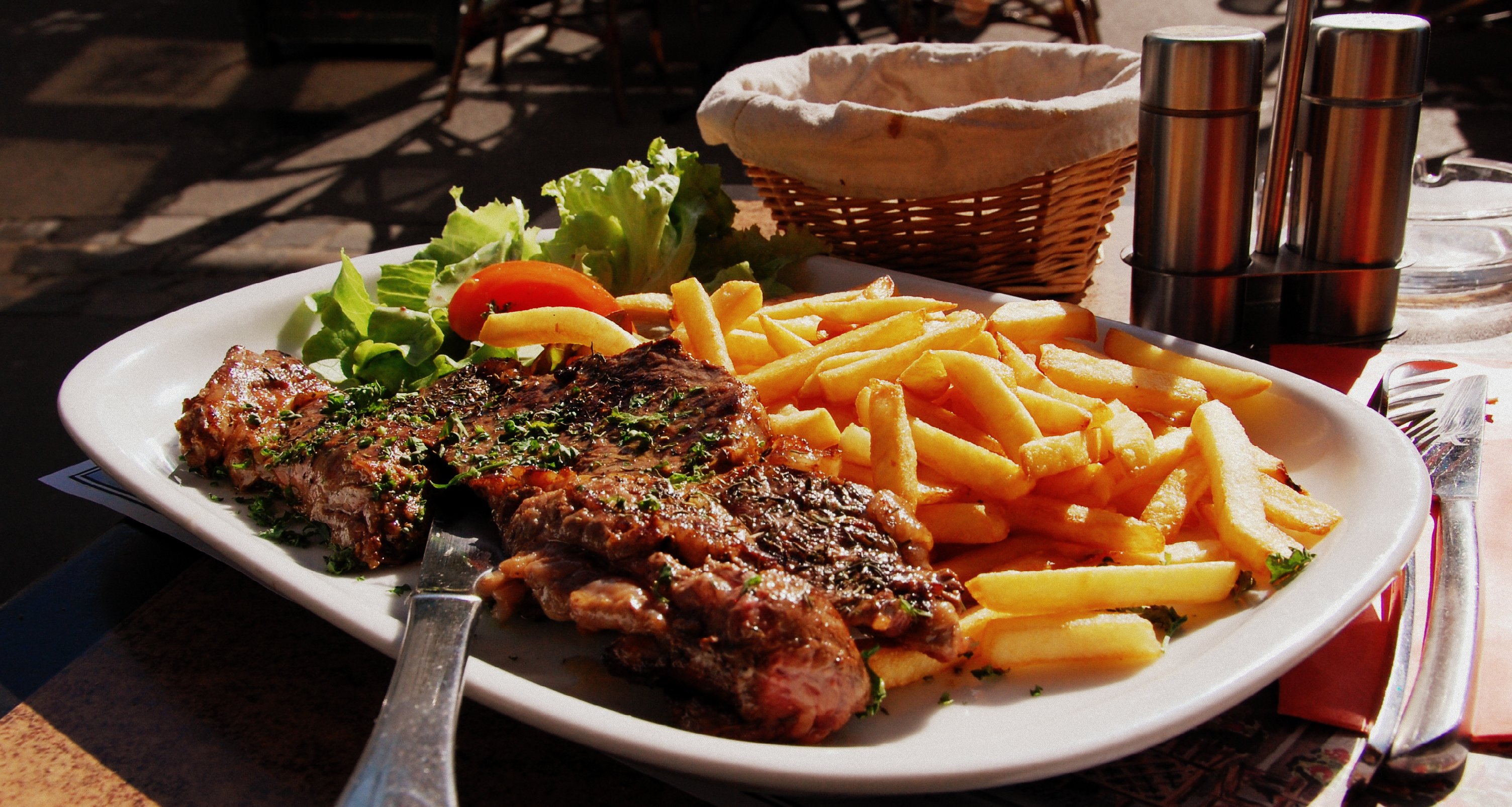
Imagine that you are presented with several stuff in your kitchen and you're supposed to cook a meal for a significant other that would dine with you at 8 in the evening. Say for example, you will have to prepare for some steak plus salad dinner. When you have your kitchen complete with everything, you don't pick all of them to be used in your recipe. You just choose those of which are useful to your plans. Of course, that includes right amount of judgment on the quantity and quality of products that you will use as ingredients. This generalized behavior is merely an illustration of how a person might be employing the concept of affordance.

On the actual manner of cooking, and this is the part where we will be more sensational on things, you will have to be more critical on each step that youwill perform in order to be successful on that steak that you want to offer to that special significant other. Before that, you opened your television and watched your favorite cooking show to see how they prepare steak in such a way that would perfectly activate the taste buds of whoever would taste it because it is just too awesome. While watching, some of your mirror neurons could be activated. According to Goldstein (2010), whenever we see someone perform a task that we perform ourselves, our mirror neurons in our premotor cortex.. Say for an instance, preparing the steak for marination. That does not requiretoo much work and one does not have to be such a pro to marinate meat. Your problem only is the recipe for the marinade, which is not part of this entry. Once you've done it before and see someone perform it later, your mirror neurons are activated letting you perceive the same action that you will perform yourself when you choose to do.

After watching the cooking show, you now proceed on the actual cooking. You prepare your ingredients and start on making miracles for yourself. If you have dyspraxia, an impairment or immaturity of the organisation of movement 8, or any related impairments, you'll have difficulties performing necessary movements that are used in cooking. When you are cooking, you are utilizing majority of your body muscles in order not to harm yourself when using a knife or when you're in front of a stove. In your brain, there are a lot of neural processing that happen one time after the other.

As for relevant to cooking, whenever you cook, you decide based on the color, the smell and the taste of the food you're working on. When you perceive that something is not appropriate, you make modifications in order to satisfy your anticipation of an ideal food. That is, certainly, what I call 'taking actions'. There is repetition or cycle of actions in order to correct any form of miscalculations in these three properties of the food. Somehow, you employ not just direct perception theory but Analysis-by-Synthesis Theory. You keep on checking and rechecking the cues from the food you're cooking and then applying the necessary actions to meet your expectations. Then once you're expectations and reality coincide, you have now a perfect dinner for you and for your significant other. Tada! 
9


Last few words from Goldstein (2010), we perceive to move and we move to perceive. I guess in taking actions, that's how it should ideally work.


REFERENCES:

Goldstein, E.B. (2010). Sensation and perception (8th ed). Belmont, CA: Cengage Learning.


All I Want For Christmas


...is a Kitchen Aid Mixer

The recipe I'm about to share, is my FAVORITE recipe for my favorite dessert. When I was in high school, the only restaurant I knew that served this heavenly dessert was Chili's. But now it seems that more and more restaurants are putting out their own version of this dessert.

Chocolate Molten Cake
from Delicious Shots

8oz Bittersweet chocolate
8 tablespoon butter (1 stick)
plus more for ramekins
3 eggs
1/2 cup granulated sugar
1/2 cup flour
1 teaspoon vanilla

Preheat oven to 400 degrees F.
Generously butter four 6 ounce ramekins.

Place the prepared molds on a baking sheet and set aside. Melt the chocolates and butter in a double boiler. In the bowl of an electric mixer, beat the eggs and sugar until pale, about two minutes, beat in the vanilla. Stir in the egg mixture into the chocolate and then add the flour, mix well. Divide the batter among the prepared ramekins and bake for 12 to 15 minutes, the edges should be firm and set but the center will still look a little wet. Serve immediately with vanilla bean ice cream. You can serve them in the ramekins or run a knife around the edges to loosen and invert onto dessert plates.

Photo Credit: [1]

Doesn't it look mouthwatering?

In order for us to make this dessert (or any dessert for that matter) we will need a multitude of tools and appliances.

Photo Credit: [2]

But with the technology we have right now, processes can be done faster and more efficiently. Just like the Kitchen Aid Stand Mixer, which according to the video can do more than just mixing cookie and bread dough, but can also make ice cream, and pasta.

Video Credit: [1]

My mom's friend told her, "Once you have a Kitchen Aid, you're never going to need anything else." And right now, this is at the top of my Christmas Wishlist.

But how exactly do we know what all of these tools are for? A type of information that Gibson specified in his approach, is that of AFFORDANCES. These are information that indicate what an object is used for (Goldstein, 2010). So when we perceive an object, we do not simply perceive it's shape, size and color, but we also get information about how the object can be used. So when you look at a cake server such as this:


Photo Credit: [3]

you see that it is silver, with a carved handle and it has a triangular top, with one serrated edge. More importantly, you see that this handle is where you hold it, and that you use the serrated side to cut the cake. You also figure out that top part is flat so that you can easily slide it under the piece of cake. This information guides our actions and behaviors, which in this case is to use the cake server to get a piece of cake.

Donald A. Norman, a cognitive scientist, wrote a book that helped popularize the notion of affordances. 


Photo Credit: [4, 5]

Below are a few examples of affordances according to Norman:

  • Plates (on doors) are for pushing
  • Knobs are for turning
  • Slots are for inserting things into
  • Balls are for throwing and bouncing
According to Norman, when affordances like these are "taken advantage of, the user knows what to do just by looking; no picture, label or instruction needed."

Affordances play a big role in how we perceive our environment. When we are confronted with unfamiliar objects, affordances provide us with cues as to how the object is probably used.

-------------------------------------------------------------------------
References:

Goldstein, E.B. (2010). Sensation and perception (8th ed). Belmont, CA: Wadsworth Cengage.

Touretzky, D. & Tira-Thompson, E. (2008.) Affordances. Retrieved from http://www.cs.cmu.edu/afs/cs/academic/class/15494-s07/lectures/affordances.pdf

Coffee Made Me Do It!


I am in love with coffee.

They say such a love for that bittersweet drink is overrated and a little bit too chic. Who cares?! Though I am not that type who regularly goes to Starbucks or even Coffee Bean for that matter (simply because I cannot afford such a high maintenance lifestyle! Maybe when I have a stable job I’d reconsider it. Haha!), homemade coffee is priceless. Brewed coffee (specifically Batangas beans, love the strong taste!) on special occasions or my default, everyday coffee, which is 3-in-1 Nescafe Brown & Creamy coffee make my day. I can never, for the love of life, end a day without taking one or two (though I used to drink more than three but then I needed to lessen it because of my hyperacidity).

Coffee love issue aside, I am most fond of how illumination can change my taste perception of coffee. Since the first semester is season of wetness and rain downpours, I suddenly thought of buying high sodium bulbs because in our house in our province is located near a farm. So there are plenty of potential mosquitoes and gnats out there ready to bite us. I installed one bulb in a lampshade and usually before I go to sleep I read books. I was surprised to see that the highlights in my Sensation & Perception book suddenly disappeared when I was reading using the illumination made by those high sodium bulbs! 


So I thought maybe what would be the perceived color of coffee or even the cup of coffee itself under changing illuminations and what effect would that have regarding taste.

Research has shown that hot chocolate tastes better in an orange cup. This implies relatively important issues with regards as to how the food should be presented or in itself, the importance of food presentation. In their experiment, 57 participants were made to drink hot chocolate in four different types of cups. All were plastic (which I became wary of because I’ve recently read that plastic containers are not healthy when hot food were placed… anyway, just a random thought) and of the same size but differed in colors (i.e. white, cream, red, and orange) outside while all being white inside the cup. After the experiment, the participants reported that the chocolate tasted better in either cream-colored or orange-colored cups. 


Well, though the study said that changes in the perception of taste on the basis of visual stimuli does not have any physiological basis, I still believe it is related with the concept of color constancy and changing illumination. I think we think that changing colors under changing illumination are so amazing because we think that color is constant. So when we see that a color of a coffee cup, for example, changes, then we are so amazed at the inconsistency it demonstrated. I think that’s the beauty of the concept of color constancy. On the other hand, in relation to the color of the cup influencing the taste perception, it may or may not be related to color constancy and that with this I think the study needs a physiological explanation for what has happened.

So how about in coffee shops, where they have different illuminations? Or perhaps, how about me drinking coffee either under a lampshade or under our well-lit living room? Honestly, I thought that drinking coffee under a lampshade was way better but I really can’t say because there are other extra factors like the factor of ambiance itself. I personally like partially illuminated places or anything that’s relaxing so too much light would be a no-no for me. On a different note, on the issue of cup colors, I can also raise question whether illumination has an indirect effect on taste perception through the change the illumination brought to the cup.

 Anyhow, all has been said and done and I better finish my coffee before it gets cold (well that’s another thing! The effect of temperature on taste perception, though the topic is not related to the coverage of topics! Hehe). Having said all these, I’d like to end this essay with a little bit of a life inspiration:

References:
Boyle, R. (2013). Important Science of the Season: Hot Chocolate Tastes Better in an 
Orange Cup. Popsci.com. Retrieved from http://www.popsci.com/science/article/2013-01/important-science-day-hot-chocolate-tastes-better-orange-cup
Goldstein, E.B. (2010). Sensation and perception (8th ed). Belmont, CA: Cengage Learning.

Photo Sources:
http://www.popsci.com/files/imagecache/article_image_large/articles/dreamstime_s_20419217.jpg
http://indulgy.net/HH/CD/UD/1975251336263993270kQ5Vssrc.jpg

Posted by: Kate Ilene Ang

Now everything's technicolor!

I don't know how to cook but I do love watching cooking shows. I love changing the channel to the Food Network, Discovery Travel and Living Channel, the Lifestyle Channel, and the Asian Food Network. I love watching shows like Man vs. Food, Iron Chef, and Cake Boss. One of my favorite cooking shows (that unfortunately did not pick up after a second season) was Junior MasterChef Australia. It is a cooking game show for children aged 8 to 12. Each episode, the children had to cook food and the judges rated them and eliminated those who did not make the cut. One of my favorite episodes in season 1 was when the children were asked to taste a pizza and name as much ingredients in the pizza as they can. Now, let's pretend that we're watching the episode from a black and white television and we paused it to this scene below.


If you looked at the picture for only 27 ms, would you be able to understand what was happening in the photo? I don't think so. According to research, however, it is possible to tell the gist of the scene - the general description - in just 500 ms (Goldstein, 2010). So if you look at it for only 27 ms, you would probably only describe seeing lines. If you looked at the picture for 40 ms, you would probably describe seeing a diagonal, rectangular shape. If you looked at it for 67 ms, you would probably be able to describe seeing the children. At 500 ms, you would probably be able to describe seeing the huge pizza with children around it - looking like they're about to eat it.

But what about if the picture was colored? Since televisions now are colored, of course it is more likely that you'll watch the episode in full color. A study done by Castelhano and Henderson (2008) shows that color has an effect on the activation of scene gist. The detection of the gist of the scene of an image was faster when images were colored. Similarly, the gist of blurred scenes were easily activated when the blurred image was colored. However, it was found that when hues of the color were changed, it could activate an incorrect scene gist.


So if I showed you the colored picture above above, you could probably activate the scene gist faster than the black and white picture I showed earlier. You could probably tell me about the huge pizza faster.


And if I showed you the blurred colored picture above, you could also activate the scene gist faster than the black and white picture.


However, if I showed you the different hues above, you could activate an incorrect scene gist. You might not be able to recognize the pizza right away nor the children. You might even mistake them for aliens - who knows.

So now, I am quite thankful that my television is colored. Because the scenes move quite fast in television, I get to activate the scene gist faster. Imagine how life was when television was still black and white. I'm glad everything's technicolor now. Also, I'm hoping that our television doesn't get broken so that the colors of the shows I'm watching don't get messed up. This is so that I can understand what is happening in the scenes as well as enjoy the delicious-looking food on tv.

-Samantha Rae M. Sanchez-

References:

Castelhano, M. S., & Henderson, J. M. (2008). The influence of color on the perception of scene gist. Journal of Experimental Psychology: Human Perception and Performance, 34(3), pp. 660-675.

Goldstein, E.B. (2010). Sensation and perception (8th ed). Belmont, CA: Cengage Learning.
Green Finger Hot Chile Pepper. Retrieved from http://www.specialtyproduce.com/index.php?item=3013. 

Photo Source:

http://cdn.static.ovimg.com/episode/3002651.jpg

Let's talk carbs and do pirouettes!

In this blog entry, lets take a break from food and talk about physical activities to shed those carbs?

With all the delicious post on food, what do you do to keep fit? Me? I dance.

I know we have all danced at a certain point in our lives. So what kind of dance was it for you? As for me, dancing is one of my passions in life. I've tried belly dancing, hip-hop for sometime, and even Japanese traditional dance! But now, I just adore ballet. 


In my ballet class, we are starting to do full pirouettes on one leg, like the one in the picture. It can get pretty painful. Pirouettes are actually challenging since you have to point your toes, keep the other leg up at a right angle, mind your arm position, keep your core tight, maintain your balance and land properly. Whew! And you are not done yet, you have to repeat doing pirouettes and keep practicing. Talk about intense! But that's not all we do in ballet. There's stretching, basic drills such as demi and basic leg & arms position, jumps etc. Try adding gracefulness, stomach in chest out and back straight into all of that.  That's an overall workout there! But all these aside have you ever wonder how skilled dancers, are able to do what they do? How are they so precise in their movements and yet so aware of their environment? Well, we go back to perception once again. 

A study by Bläsing and collegues in 2012 on Neurocognitive control on dance perception and performance, reviewed and cited studies how dancing enhances skill on proprioceptive senses as well as somatosenses and the ability to coordinate it with visual perception. When in comes to dynamic movements, dancer rely more on their proprioception more than their visual senses as demonstrated by Golomer &
Dupui in 2000. (cited by Bläsing et.al., 2012) However, in stationary balancing skilled dancer seemed to rely on vision cues as showed in the study of Golomer,
Dupui, Sereni, & Monod in 1999 (cited by Bläsing et.al., 2012) An example of this stationary balancing is the technique called spotting. You see dancers do these when they turn, they anchor their gaze on something to keep them focused and balanced. These studies and review are examples of the Ecological Approach on Perception. This talks about how perception occurs in our environment. (Goldstein, 2010) To explain dancing, lets look as the self-produced information. It basically means that our movements gives information on how to continue moving. Does that make sense? As you execute the steps you realize you are near the end of the stage so you adjust your steps and your pacing to avoid falling! Move to see and see to move. Isn't it cool? Breaking down perception and applying it in daily life activities! I hope you guys learned something and keep on dancing or having an active lifestyle!
For now,


Can you think of you own application on self-produced information and how it applies to your "staying-fit activities?"

Feel free to comment below and share your experience on dance, yoga, jog, boxing or which ever activity you do to shed those carbs. :) I hope you enjoy this blog post (I hope you are now interested in dancing) and i promise we will talk about food in the next entries! 


References:

Bläsing, B., Calvo-Merino, B., Cross, E. S., Jola, C., Honisch, J., & Stevens, C. J. (2012). Neurocognitive Cognitive Control on Dance Perception and Performance. Acta Psychologica, 300-308.


Goldstein, B. (2010). Sensation and Perception. California: Wadsworth, Cengage Learning.


Image sources:
http://danceadvantage.net/wp-content/uploads/2010/09/turn-renemichaels-129x200.png
http://tututimes.files.wordpress.com/2013/07/keep-calm-and-pirouette-29.png?w=547&h=638


Blog Template by BloggerCandy.com; Edited by SamS