
So what is the connection of this saying to Jane's Kitchenette? I would really like to say there IS a direct link between the two but I guess that is nearly impossible so I would stick on elaborating and clearing things to make a connection between action, perception and food.
Action is present everywhere. According to Goldstein (2010), action includes motor activities such as moving the head or eyes and locomoting through the environment. There is also action that occur just in place. From these descriptions, one will grasp an idea that at the moment he/she reads this statement, there is already action.
We may focus solely on that simple situation wherein you read my entry (as the action) after you perceive its features, the letters and words and how they all form the meaning. However, this is Jane's Kitchenette so I might as well provide you with an example that would give you an idea on how food is so much related in taking actions.
Actually, I will not discuss any specific form of food that is closely related to some actions. However, the manner of preparing food will be the focus of this entry in order to brighten up this blurry connection between food, perception and action. That action, in my own generic vocabulary, is cooking.
Cooking is defined as the act of preparing something (as food) by the application of heat. 2 It is defined as the technical process pertaining to how foods are being prepared. When we cook, we follow instructions in order to get the taste that we want. We watch cooking shows,read lots of cooking books and, or course, you visit f-logs (food-blogs) like Jane's Kitchenette to consult something for a recipe.

.jpg)

There are several cooking shows which cater the talents and excellent abilities of people who are very passionate about cooking. I, sometimes, ignore the rest of the world whenever I watch cooking shows. I almost came to that point when I fantasize myself as a pronounced chef worldwide. But then, I thought, haha that would be funny.
Seriously, when we think of cooking as just mere cooking, we do not explore anymore the area where the person him/herself, who does the work, is actually the one more magnificent than his recipe because he/she made something edible for life. A few could have asked, what it is in their hands or what is the trick that they do with foods or how they come up with such a brilliant idea on making that certain food that after sometime would be enjoyed by everyone.
.jpg) |
| I remember this anime entitled, Yakitate Japan! The main character has solar hands making his bread the best bread in town. 6 |
If we try to dig deeper on the physiological aspect of cooking, we would come across several articles involving physiology of taste and smell. These two sensory modalities are highly utilized when we cook. There may be times when you express your distaste of something just by smelling it. You have this initial prejudice of the quality of the food. Though sight of the food has been found to be highly conducive on the perception of food, we shall make things closer to cooking and that I'm thinking is reliant on the taste and smell of the recipe.
Before discussing that sensational part of cooking, I shall describe first this exceptional approach to perception of J.J. Gibson, that is, Ecological Approach. In this approach, he introduced terminologies such as optic array, optic flow,invariant information and affordance. The most significant and relevant term for this entry is affordance or the utility of the object to people, or to the perceiver (Goldstein, 2010). In later researchers, it was found out that objects were recognizez more easily when cues are associated to the object's function. I said awhile ago that affordance is necessary for cooking. Why?
.jpg)
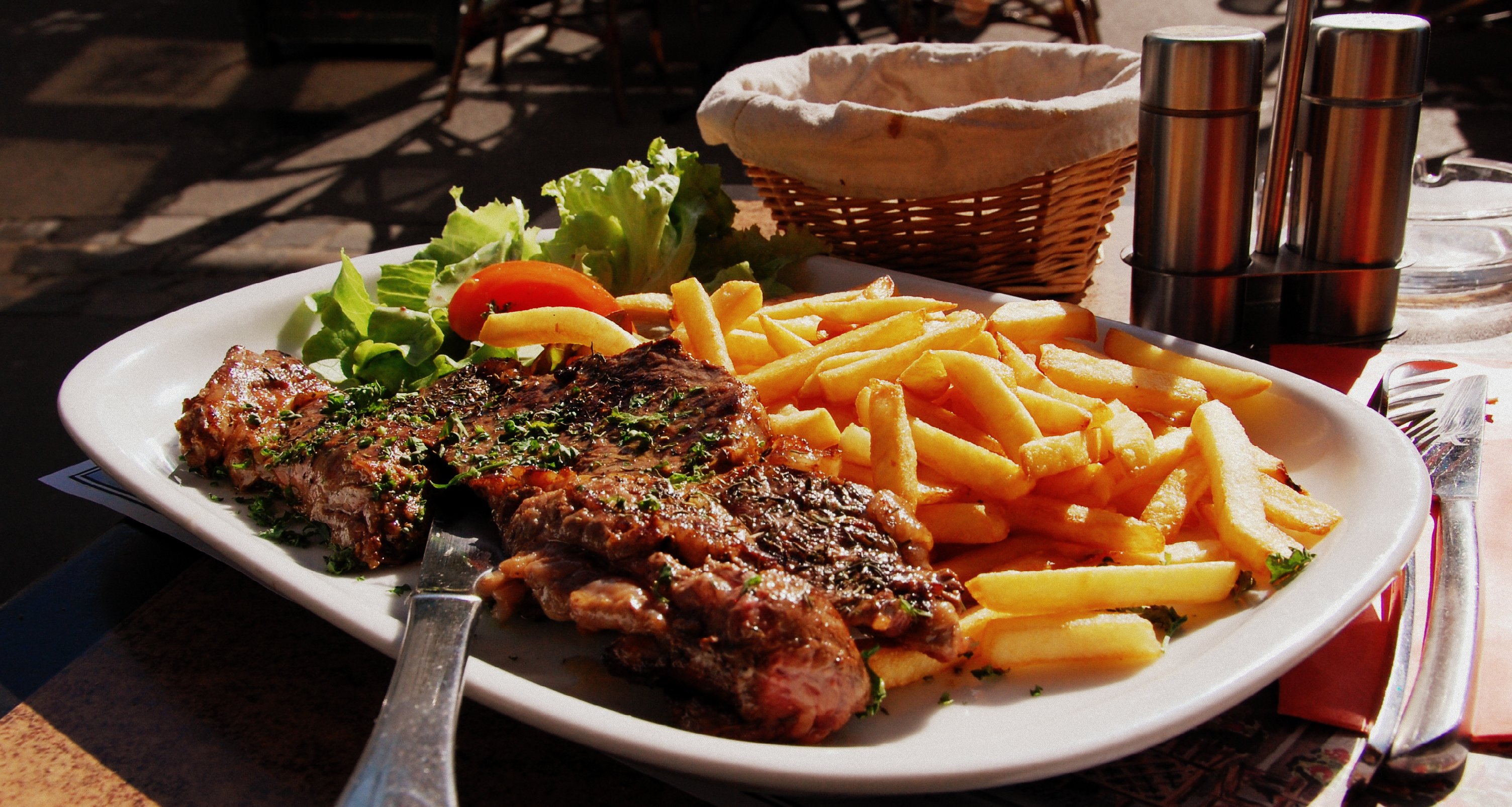
Imagine that you are presented with several stuff in your kitchen and you're supposed to cook a meal for a significant other that would dine with you at 8 in the evening. Say for example, you will have to prepare for some steak plus salad dinner. When you have your kitchen complete with everything, you don't pick all of them to be used in your recipe. You just choose those of which are useful to your plans. Of course, that includes right amount of judgment on the quantity and quality of products that you will use as ingredients. This generalized behavior is merely an illustration of how a person might be employing the concept of affordance.
On the actual manner of cooking, and this is the part where we will be more sensational on things, you will have to be more critical on each step that youwill perform in order to be successful on that steak that you want to offer to that special significant other. Before that, you opened your television and watched your favorite cooking show to see how they prepare steak in such a way that would perfectly activate the taste buds of whoever would taste it because it is just too awesome. While watching, some of your mirror neurons could be activated. According to Goldstein (2010), whenever we see someone perform a task that we perform ourselves, our mirror neurons in our premotor cortex.. Say for an instance, preparing the steak for marination. That does not requiretoo much work and one does not have to be such a pro to marinate meat. Your problem only is the recipe for the marinade, which is not part of this entry. Once you've done it before and see someone perform it later, your mirror neurons are activated letting you perceive the same action that you will perform yourself when you choose to do.
After watching the cooking show, you now proceed on the actual cooking. You prepare your ingredients and start on making miracles for yourself. If you have dyspraxia, an impairment or immaturity of the organisation of movement 8, or any related impairments, you'll have difficulties performing necessary movements that are used in cooking. When you are cooking, you are utilizing majority of your body muscles in order not to harm yourself when using a knife or when you're in front of a stove. In your brain, there are a lot of neural processing that happen one time after the other.
As for relevant to cooking, whenever you cook, you decide based on the color, the smell and the taste of the food you're working on. When you perceive that something is not appropriate, you make modifications in order to satisfy your anticipation of an ideal food. That is, certainly, what I call 'taking actions'. There is repetition or cycle of actions in order to correct any form of miscalculations in these three properties of the food. Somehow, you employ not just direct perception theory but Analysis-by-Synthesis Theory. You keep on checking and rechecking the cues from the food you're cooking and then applying the necessary actions to meet your expectations. Then once you're expectations and reality coincide, you have now a perfect dinner for you and for your significant other. Tada!

Last few words from Goldstein (2010), we perceive to move and we move to perceive. I guess in taking actions, that's how it should ideally work.
REFERENCES:
Goldstein, E.B. (2010). Sensation and perception (8th ed). Belmont, CA: Cengage Learning.


0 comments:
Post a Comment